 LANOVA← Lanova homeLANOVA← Lanova home
Vorix paper trading gives you a $100,000 simulated balance on live market data — the real terminal, real prices, pretend money. It is part of the free tier, needs no deposit, and exists for one reason: the cheapest trading lessons are the ones that cost you nothing.
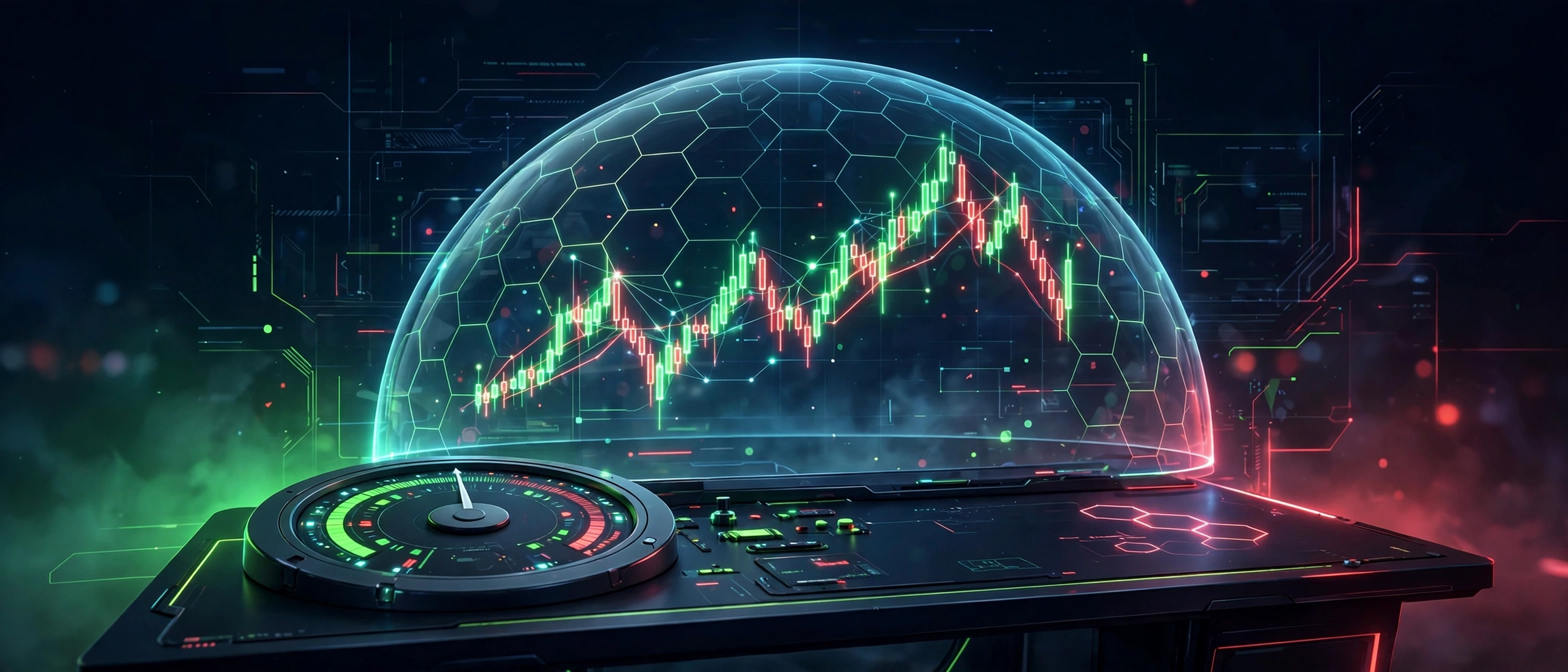
Practice under the dome. Real market weather outside, no real money inside.
Open Vorix and switch to the paper account. You start with $100,000 in virtual funds and trade against live market prices — the same charts and the same trading terminal used for real trades, with simulated fills. Buy, sell, set stops, size positions, and watch a portfolio behave the way a real one would, minus the part where mistakes cost rent money.
Paper trading teaches the terminal and the mechanics. It does not reproduce two things that decide real results: your own reactions when real money drops 20% in an hour, and real execution on thin coins, where a live order can move the price or fail to fill the way a simulation fills it. A strong paper record means you are practiced — it is not proof a strategy makes money.
Lanova holds its own bots to that same standard. Our strategies are not trusted because a backtest looked good; they run in a public forward paper test with locked rules and real costs, and they only become candidates for real money after passing it. Read more on the Vorix trading bots page.
A $100,000 simulated balance. Prices are live and real; the funds are pretend, and no real trade ever leaves the practice account.
Yes — it is part of Vorix's free tier, and the paper account runs entirely on simulated funds, so there is nothing to deposit. Ultimate members additionally get the full toolset in paper/demo mode.
Not necessarily. Paper removes the emotional pressure and the rough execution of real markets. Treat it as training completed, not profit proven — the same reason Lanova forward-tests its bots in public before trusting them.
The same terminal: connect your wallet through Nova Connect and sign your own trades. The Vorix pricing page shows what each tier adds when you get there.
Paper trading is simulated: no real funds are used or at risk, and simulated performance does not guarantee live results. Cryptocurrency trading carries real risk of loss; nothing here is financial advice.